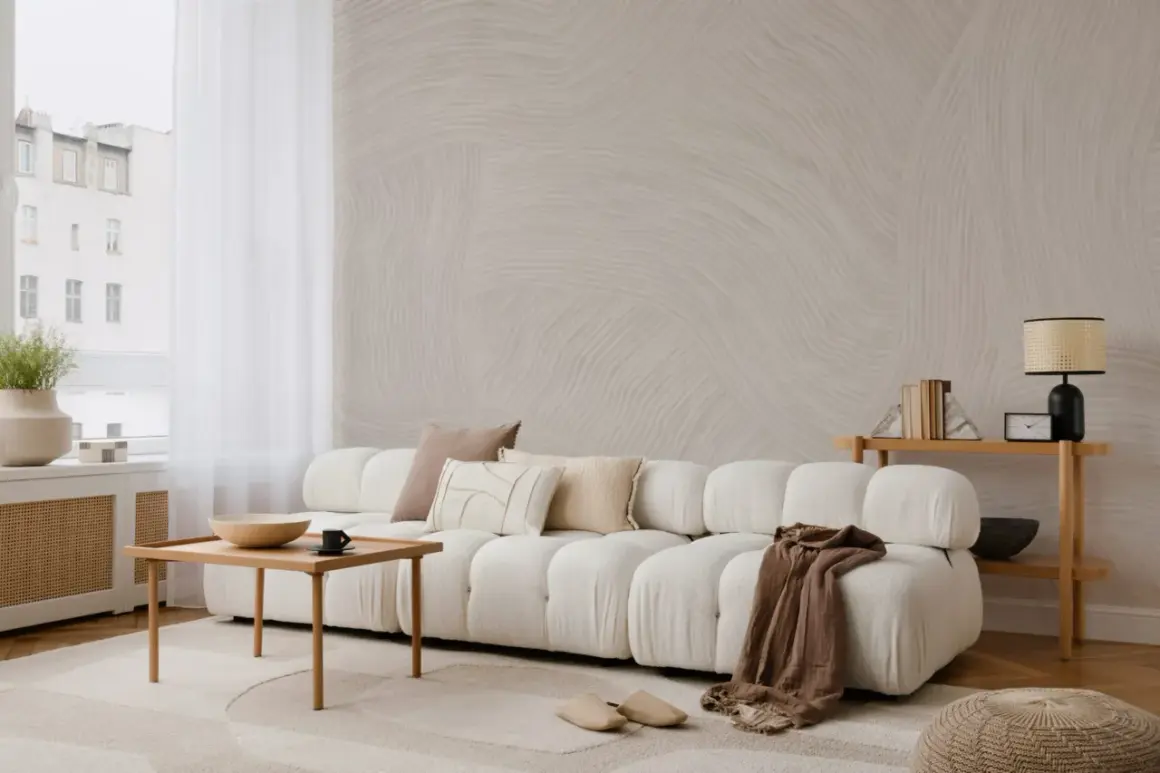
A Japandi style home works best when every piece earns its place: the room feels quiet, but never empty; refined, but still comfortable. In this guide, I break down what the style really is, which materials and colors do the heavy lifting, how to adapt it room by room, and where people usually go wrong. That is what separates a serene interior from a space that only looks minimal at first glance.
The essentials at a glance
- Japandi combines Japanese restraint with Scandinavian comfort, so the result should feel calm, warm, and functional.
- Natural materials matter more than decoration; wood, linen, wool, stone, ceramic, and paper do most of the visual work.
- Low, clean-lined furniture helps the room feel grounded and open without looking sparse.
- Neutral color is only the starting point; the real effect comes from texture, light, and a few darker accents.
- Storage is part of the design; if clutter stays visible, the style loses its calm immediately.
- In 2026, this look sits close to warm minimalism, which is why it still feels current without chasing a loud trend.
What Japandi really means in a home
I think of Japandi as a design language built on restraint, craftsmanship, and comfort. Architectural Digest describes it as a blend of Japanese and Scandinavian principles, and that is the right starting point: one side brings calm, proportion, and respect for empty space; the other adds softness, light, and everyday livability.
That balance is why the style works so well in American homes, especially open-plan layouts where visual noise builds fast. A room can have very little in it and still feel complete, as long as the proportions are right and the materials feel honest. The style is not about stripping a house bare. It is about editing more intelligently.
| Style | What it prioritizes | How it usually looks | What goes wrong when it is pushed too far |
|---|---|---|---|
| Japanese | Calm, restraint, craftsmanship | Low profiles, open space, natural textures | Can feel severe if there is no softness or warmth |
| Scandinavian | Light, function, comfort | Bright rooms, clean lines, cozy layers | Can drift into generic minimalism without character |
| Japandi | Balance between the two | Warm neutrals, practical furniture, quiet character | Can look flat if texture and contrast are missing |
The two ideas that hold it together are wabi-sabi, the Japanese appreciation of imperfection, and hygge, the Scandinavian sense of ease and coziness. If those ideas sound abstract, translate them into design terms: choose pieces with character, leave room to breathe, and make the space feel usable first. Once that framework is clear, the next question is what to put on the walls, floors, and larger furniture pieces.
Colors and materials that carry the style
House Beautiful continues to point to low furniture, natural materials, neutral palettes, paper lanterns, and imperfect ceramics as the visual shorthand for the style, and that still holds up. The palette should feel softened by daylight rather than painted in a decorative way. I usually start with warm white, greige, stone gray, sand, taupe, and a little cocoa or soft black for depth.
The bigger mistake is assuming “neutral” means “blank.” A successful Japandi room has several quiet layers, not one flat beige tone repeated everywhere. If the room only uses the same shade in every finish, the space loses tension and starts to feel washed out.
| Material | Why it works | Best use | What to avoid |
|---|---|---|---|
| Oak or ash wood | Brings warmth and visible grain | Tables, bed frames, shelving, sideboards | High-gloss stains and overly orange finishes |
| Linen | Softens the room without feeling fussy | Curtains, bedding, slipcovers, cushions | Heavy shine or stiff synthetic blends |
| Wool or boucle | Adds tactile depth | Rugs, accent chairs, throws | Too much texture in every surface at once |
| Stone or ceramic | Creates contrast and weight | Countertops, vessels, lamps, trays | Overly ornate finishes or loud patterns |
| Paper or rattan | Lightens the visual load | Pendant lights, shades, storage baskets | Using them as the only texture in the room |
The safest rule is simple: choose one dominant wood tone, one soft textile family, and one grounding material such as stone, ceramic, or matte metal. That gives the eye enough variety without making the room busy. From there, the furniture layout matters just as much as the palette, especially once you start applying the style to real rooms.
How to furnish each room without losing the calm
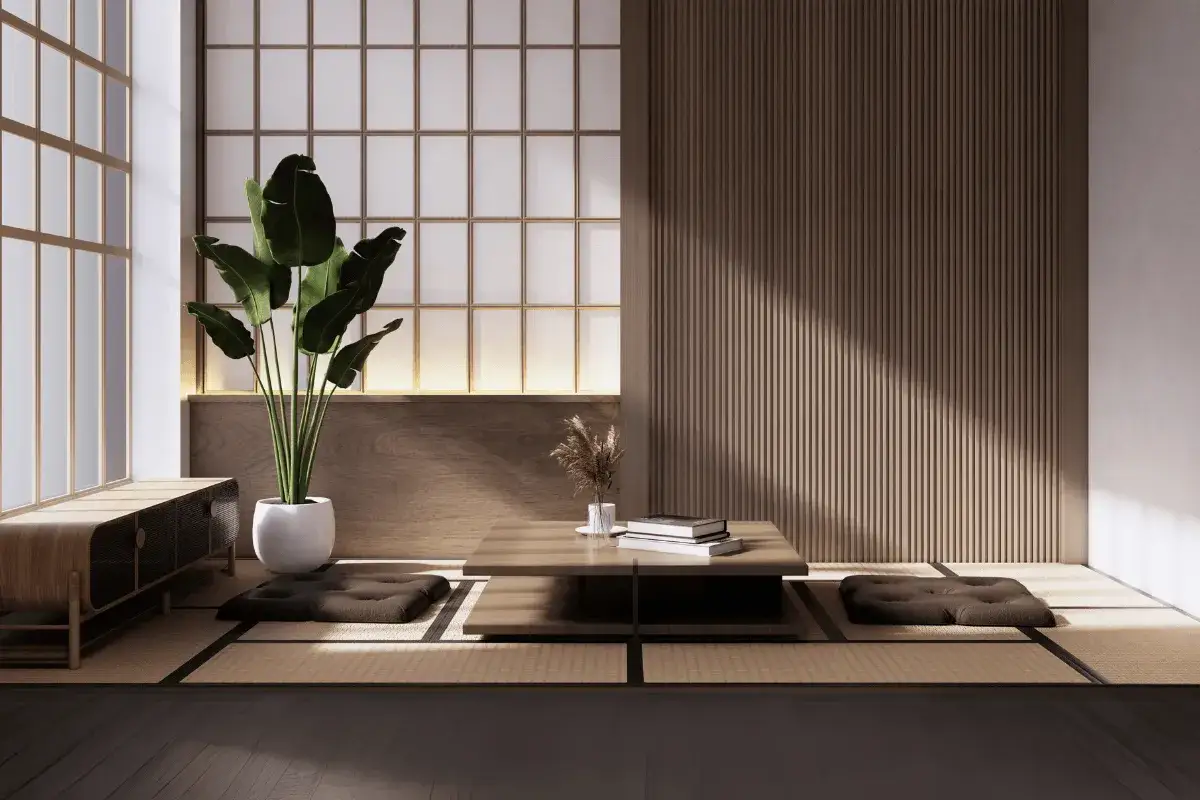
Japandi is easiest to understand when you see how it behaves in different spaces. The style is consistent, but not identical from room to room. A living room needs more softness, a bedroom needs more quiet, and a kitchen needs more durability and visual discipline. I always adjust the balance instead of copying the same formula everywhere.
Living room
The living room should feel grounded and open at the same time. Choose a sofa with clean lines, a low coffee table in wood or stone, and one or two tactile pieces such as a woven rug or an upholstered chair. Keep the silhouette low to the floor when possible; that helps the room feel calm and spacious.
- Use a larger rug than you think you need so the seating area feels intentional.
- Keep decorative objects grouped and sparse instead of scattering them around the room.
- Mix one structured piece with one softer piece, such as a wood table and a linen sofa.
Bedroom
The bedroom is where the style can be most persuasive, because the aesthetic is naturally suited to rest. A simple wood bed frame, soft bedding in layered neutrals, and restrained lighting are usually enough. I would rather see three excellent textures here than ten decorative items that have to be dusted and rearranged.
- Keep bedside tables compact and visually quiet.
- Use blackout or dimmable window treatments if the room gets too much light at night.
- Add one natural object, not a cluster of them, so the room still feels composed.
Kitchen
A Japandi kitchen depends on clean storage and disciplined surfaces. Flat-front cabinetry, matte finishes, and wood accents usually work better than decorative detailing. In practical terms, this is where the style earns its reputation for being both serene and usable.
- Hide appliances where possible so the counters stay visually calm.
- Choose a backsplash with texture rather than a loud pattern.
- Keep visible objects limited to the ones you actually use often.
Read Also: Mediterranean Interior Design - Get the Authentic Look!
Entryway
The entry is small, but it sets the tone immediately. A narrow bench, a shallow console, a mirror with a quiet frame, and hidden shoe storage can do more for the style than a dozen accessories elsewhere. If the entry is cluttered, the rest of the house will never feel fully resolved.
Once the furniture is in place, the next challenge is avoiding the mistakes that make the look feel staged instead of lived in.
The mistakes that make it feel flat or staged
The most common mistake is overusing beige and calling it balance. A room can be pale and still have depth, but only if the materials vary enough to catch light differently. Another mistake is going too hard on symmetry, which can make the room feel stiff rather than calm.
- Using too many matching finishes flattens the space. A wood table, wood floor, and wood shelf all in the same tone can blur together.
- Choosing decor before furniture usually leads to clutter. Start with the main pieces, then add only what improves the room’s function or texture.
- Ignoring scale makes the style feel accidental. Too-small rugs, tiny lamps, and undersized artwork weaken the composition.
- Adding trendy objects just to fill negative space breaks the calm. Empty space should feel intentional, not nervous.
- Copying the look without understanding the culture behind it is a real risk. The strongest rooms borrow principles, not clichés.
My rule is simple: if an object does not improve comfort, proportion, or function, it probably does not belong. That may sound strict, but it is what keeps the room from sliding into generic minimalism. The next step is turning that idea into a practical plan you can actually follow.
A practical plan for getting there without overspending
If I were starting from scratch in a typical US home, I would build the room in this order. It keeps the budget focused on the pieces that shape the whole experience, rather than on small accessories that can wait.
- Choose the largest furniture first: sofa, bed, dining table, or storage base. These pieces set the visual weight of the room.
- Select one main wood tone and one textile family. That decision prevents a mismatched, piecemeal look.
- Lock in the palette. I like to pair a soft white or greige base with one darker accent, such as charcoal, espresso, or muted black.
- Add lighting in layers. Combine ambient light, task light, and one softer decorative source so the room works at night without feeling harsh.
- Build in storage before you add decor. Closed storage is one of the quietest ways to support the style.
- Finish with only a few objects that have presence: a ceramic bowl, a paper shade, a plant, a framed print, or a handmade vessel.
This sequence matters because it stops the room from becoming a collection of “Japandi-looking” objects with no structural logic behind them. I have seen many spaces fail simply because the owner bought accessories first and furniture later. The result is always the same: too many small gestures, not enough overall coherence.
If the budget is tight, spend on the sofa or bed frame, the main rug, and the best lighting you can reasonably afford. Those three choices carry far more visual authority than a shelf full of decor. From there, you can refine the atmosphere with smaller changes over time.
The details that keep it warm after the furniture is in place
The final layer is what makes the interior feel lived in instead of styled for a photo. This is where lighting temperature, art, plants, and daily habits matter. I prefer a room that feels slightly edited over one that feels overdesigned, but it still needs a pulse.
Use warm, indirect light in the evening. A paper lantern, a shaded floor lamp, or a wall sconce with a soft glow can change the whole tone of the room. Keep wall art restrained, but not absent. One oversized print or a pair of quiet framed pieces usually does more than a gallery wall packed with images.
- Choose plants with simple structure rather than fussy silhouettes.
- Rotate textiles seasonally so the room stays comfortable year-round.
- Store everyday items in baskets, drawers, or cabinets instead of leaving them exposed.
- Leave some surfaces empty on purpose so the room can breathe.
What I like most about this approach is that it rewards editing over accumulation. The room does not need to be perfect, and it should not be. It just needs enough warmth, contrast, and order to make the quiet feel deliberate. If you keep that balance in mind, the style will read as calm, modern, and genuinely livable rather than just another minimal trend.