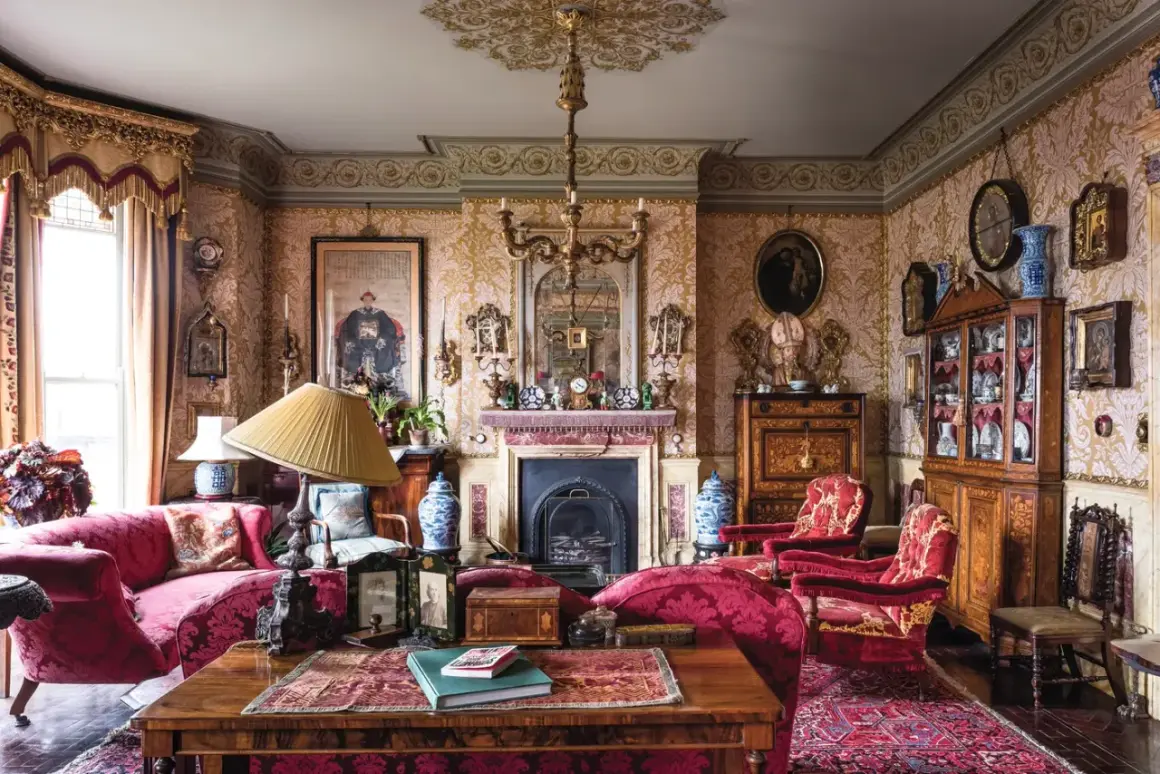
The essentials at a glance
- The style is ornamental, but it is also structured; rooms were meant to feel full without becoming random.
- Deep colors, wallpaper, carved wood, and layered textiles do most of the visual work.
- The easiest way to modernize it is to keep one strong historical cue and let the rest of the room breathe.
- Powder rooms, dining rooms, and bedrooms usually handle the look better than open-plan living spaces.
- Antiques are useful, but you do not need a museum-level collection to capture the feeling.
What makes a room feel Victorian
I think the fastest way to understand the style is to stop treating it like a single formula. It grew out of a long 19th-century period, so it absorbed Gothic Revival drama, Italianate elegance, and later eclectic tastes that made the rooms richer and more layered than minimal modern interiors. What ties those rooms together is not one exact color or one exact chair, but density with intention: walls, furniture, fabrics, and decorative objects all work together instead of competing for attention.
That is why Victorian rooms often feel structured even when they look abundant. There is usually a clear focal point, a strong sense of symmetry or balance, and a deliberate separation between grander public spaces and more private rooms. In American homes, especially newer ones, that often translates into solid millwork, framed art, substantial furniture, and a room that looks curated rather than casually assembled. Once you see that logic, the next question is which materials and colors carry the style most effectively.
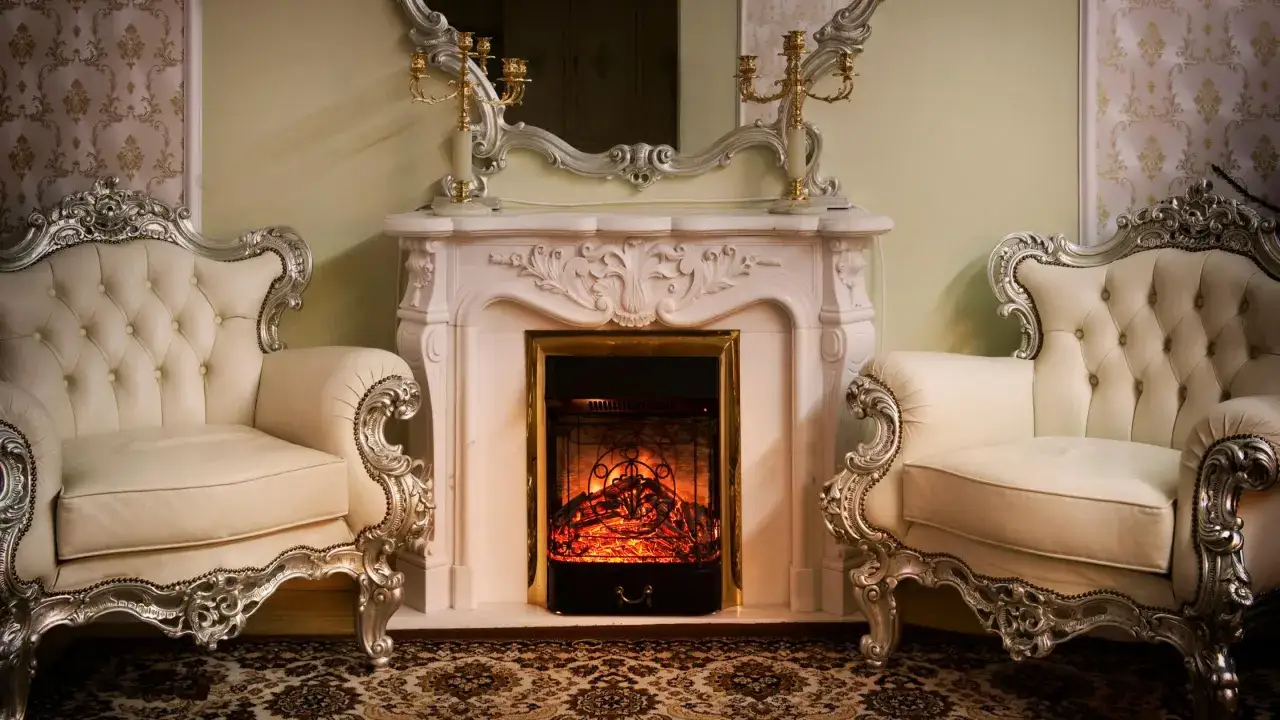
The materials, colors, and furniture that do the heavy lifting
The visual language of the style depends on a few repeatable ingredients, and I would focus on those before buying a single accessory. The strongest Victorian rooms usually lean on rich woods, layered textiles, patterned walls, and metal accents. If those four things are right, the room can tolerate a lot less clutter than people assume.
| Element | What it does | How to use it today |
|---|---|---|
| Color | Creates depth and warmth through jewel tones, deep greens, navy, burgundy, plum, and warm neutrals. | Use one dominant deep color, then soften it with cream, taupe, or aged white so the room does not feel sealed off. |
| Wallpaper and wall treatment | Adds pattern, rhythm, and a sense of richness that paint alone rarely delivers. | Try damask, floral, stripe, toile, or panel molding with wallpaper on selected walls instead of covering everything. |
| Wood and millwork | Gives the room weight and architectural character. | Keep dark-stained trim, a carved mantel, a substantial table, or one standout wood piece rather than spreading the effect too thin. |
| Textiles | Softens the formality and adds the layered feeling that defines the style. | Use velvet, brocade, damask, lace, fringe, or heavy drapery in measured doses. |
| Furniture | Signals the era through scale and silhouette. | Look for tufted seating, wingback chairs, settees, pedestal tables, and curved or carved legs. |
| Lighting and metal | Brings sparkle and contrast so the room does not feel flat. | Brass, bronze, crystal, and etched glass work well, especially when the fixture feels substantial rather than delicate. |
The mistake I see most often is treating every surface as equally important. Victorian rooms work better when one or two materials lead and the rest support them. A velvet chair against a simpler wall, or a patterned wall with restrained upholstery, usually reads far better than trying to make every object equally ornate. That balance is what keeps the look from tipping into noise, and it leads naturally to the problem of adaptation in a modern home.
How to translate the look into a modern American home
Most American homes are not original 19th-century houses, and that is fine. I would not try to force a full historical reconstruction into a ranch house, a condo, or a remodeled open-plan layout. The smarter move is to borrow the style’s language: one strong decorative gesture, a few supporting materials, and enough negative space for the room to feel livable.
- Start with one anchor, such as wallpaper, a statement rug, a carved wood table, or a dramatic sofa.
- Keep the palette focused. Three or four coordinated colors are usually enough.
- Mix one period-looking element with simpler contemporary forms so the room feels current, not theatrical.
- Use drapery to restore height and softness, but leave natural light where you can.
- Repeat one metal finish instead of scattering brass, chrome, and nickel in the same room.
- Leave breathing room around the most ornate object so it has visual importance.
I usually tell readers that a modern Victorian-inspired room should feel collected, not decorated all at once. If you have an open plan, the style tends to work better in defined zones than across the entire floor. If your home already has trim, a mantel, paneling, or a staircase with character, preserve it and build around it instead of covering it up. That is the simplest way to make the style feel natural rather than forced, and it helps when you start assigning the look room by room.
Room-by-room choices that feel believable
Living room
The living room should carry the most visible structure. I would use one substantial sofa or settee, a patterned rug, and at least one piece of furniture with a visibly traditional silhouette, such as a wingback chair or carved side table. A mantel, mirror, or framed artwork can act as the focal point. The key is to let the room feel formal enough to be intentional, but not so packed that it becomes hard to live in.
Dining room
This is where the style often looks its best because the function of the room already supports a sense of ceremony. A dark wood table, upholstered dining chairs, a chandelier, and patterned wall treatment can do more than a dozen small decorations. If you want to push the mood, dining rooms are the right place to do it; the room can handle stronger color and denser pattern because the furniture already has a centered layout.
Bedroom
Bedrooms work best with a softer version of the same idea. I would focus on layered bedding, a tufted or carved headboard, heavier curtains, and one decorative mirror or lamp. The room should feel romantic and enveloping, but it still needs to function as a place to rest. In practice, that means fewer hard contrasts and a little more restraint than you would use in a formal sitting room.
Read Also: Friends Apartment Design - Timeless Lessons for Your Home
Powder room or entryway
These smaller spaces are the safest places to experiment. A powder room can take bold wallpaper, a painted ceiling, a framed vintage-style mirror, or a dramatic light fixture without overwhelming the rest of the home. Entryways work for the same reason: they set the tone quickly, and they do not need to carry the practical burden of everyday family life. If you want to test the style before committing to a larger room, start here.
Once the room is in place, the real risk is not under-decorating it. It is making every decision louder than it needs to be. That is where the most common mistakes show up.
Common mistakes that flatten the style
- Treating Victorian style as if it only means dark brown furniture and heavy curtains.
- Mixing too many ornate patterns at the same scale, which makes the room feel restless instead of layered.
- Using small decorative objects everywhere instead of a few larger, more confident pieces.
- Choosing glossy faux-antique finishes that look cheap rather than aged.
- Ignoring lighting, especially in rooms with dark paint or wallpaper.
- Filling every wall and every shelf, leaving no visual pause.
The best Victorian rooms still have rhythm. They alternate between ornate and plain, dark and light, soft and hard. I always pay attention to that contrast, because it is usually what separates a sophisticated room from one that feels overcrowded. If you are deciding what to buy, the next question is whether to lean on original pieces or newer ones with period cues.
Antique originals versus Victorian-inspired pieces
This is less of an either-or decision than people think. In real homes, the strongest results usually come from mixing both. An original antique can bring patina and authenticity, while a newer piece with period cues can solve practical problems like scale, durability, and budget. The trick is knowing what each option does best.
| Option | Best for | Strength | Trade-off |
|---|---|---|---|
| Antique originals | Statement pieces, heirloom accents, and rooms that need history. | They add patina, depth, and a sense of provenance. | They can be fragile, harder to source, and less forgiving in everyday family spaces. |
| Reproductions | Dining chairs, mirrors, lighting, and larger coordinated sets. | They make the style easier to assemble and easier to live with. | Quality varies, and weak proportions can make the room feel flat. |
| Contemporary pieces with Victorian cues | Modern homes, smaller rooms, and mixed-style interiors. | They keep the room functional while echoing the era through shape or texture. | They bring less historical depth, so they need stronger supporting details around them. |
If I were furnishing a real house for everyday use, I would usually combine all three. One original or antique-inspired anchor, a few well-made modern pieces, and a couple of traditional details are often enough to create the right atmosphere. That is the practical middle ground, and it leads to the rules I would keep if I wanted the room to age well.
The rules I would keep if I wanted the room to age well
- Choose one strong historical cue per room instead of trying to reference everything at once.
- Repeat one dominant wood tone and one dominant metal finish so the room feels coherent.
- Let texture do some of the work that extra ornament usually tries to do.
- Use real fabric, real wood, and real light where the room gets touched the most.
- Leave at least one calm surface, because the eye needs a place to rest.
- Let the room feel collected over time rather than perfectly matched.
That is why the style still works so well now: it gives a room memory, structure, and warmth without relying on trends. If you keep the scale thoughtful and the ornament selective, the result feels layered rather than copied, and that is the difference between a room that looks themed and one that feels genuinely lived with.